
Key Takeaways
- Expense Ratio Defined: The expense ratio is the annual fee expressed as a percentage of your investment, covering the operating costs of a fund.
- Impact on Returns: Even a small difference in expense ratios can have a significant impact on your investment’s long-term growth.
- Active vs. Passive Funds: Actively managed funds typically have higher expense ratios than passively managed ones like index funds and ETFs.
- Lower Costs with Index Funds: Index funds and ETFs generally offer lower expense ratios, making them a cost-effective choice for long-term investors.
- Importance of Monitoring: Regularly review the expense ratios of your current investments to ensure they align with your financial goals.
- Cashvisory Support: Cashvisory can help you analyze and optimize the expense ratios in your portfolio, maximizing your investment returns.
The Importance of Expense Ratio While Selecting Investments
When it comes to selecting investments, whether it’s mutual funds or exchange-traded funds (ETFs), one of the most crucial yet often overlooked factors is the expense ratio. While investors may focus on past performance or the reputation of a fund manager, the expense ratio can significantly impact the long-term returns on your investment. In this blog, we’ll explore what the expense ratio is, why it matters, and how it should influence your investment decisions.
What is the Expense Ratio?
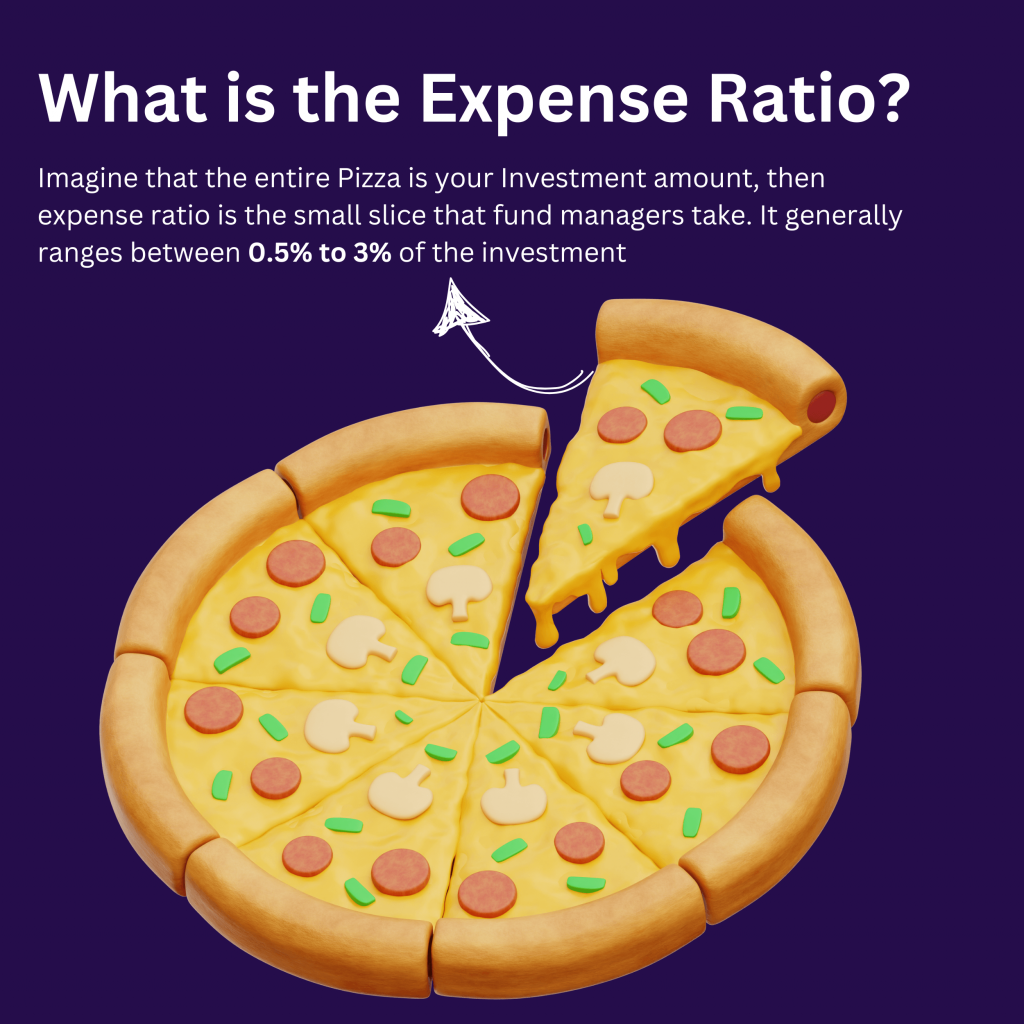
The expense ratio represents the annual fee that all funds or ETFs charge their shareholders. This fee is expressed as a percentage of your investment and covers the operating costs of the fund, including management fees, administrative expenses, and other costs associated with running the fund.
High vs. Low Expense Ratios: Generally, an expense ratio above 1% is considered high, whereas anything below 0.5% is considered low. However, the ideal expense ratio depends on the type of fund and its management style.
Active vs. Passive Management: Actively managed funds usually have higher expense ratios because they require more hands-on management.
“Hands-on management” means that actively managed funds involve fund managers frequently making decisions about which stocks or assets to buy and sell, aiming to outperform the market. This process involves a lot of research and adjustments to the fund’s holdings. In contrast, passive funds like index funds don’t require this level of active decision-making; they simply track a market index, resulting in lower costs.
In contrast, passively managed funds, like index funds or ETFs, typically have lower expense ratios because they simply track a market index and require less active management.
Why Are Expense Ratios Higher for Mutual Funds?
The expense ratio for mutual funds is typically higher than that of ETFs. This is because most ETFs are passively managed.
“Passively managed” means that the fund simply follows a set investment strategy or market index, such as the S&P 500, without frequent changes. This approach doesn’t require ongoing decision-making about which assets to buy or sell. For example, a fund that tracks the S&P 500 buys and holds the same stocks that are in the S&P 500 index, aiming to match its performance.
This is different from actively managed funds, which involve constant adjustments based on market conditions and are therefore more expensive to run. This active management comes at a cost, which is passed on to the investors in the form of a higher expense ratio.
Factors Affecting the Expense Ratio
Several factors can influence the expense ratio of a fund, including:
- Fund Management Style: Active funds, which require more research and frequent trading, tend to have higher expenses than passive funds.
- Fund Size: Larger funds can spread their operating costs over a larger pool of assets, which may result in a lower expense ratio.
- Fund’s Investment Strategy: Funds that invest in more complex or international assets may have higher costs due to the need for specialized expertise and additional resources.
- Marketing and Distribution Costs: Some funds allocate a portion of the expense ratio to cover the costs of marketing and distribution.
Impact of Expense Ratio on Investor Profit
Even a seemingly small difference in expense ratios can have a significant impact on your investment returns over time. Let’s illustrate this with an example:
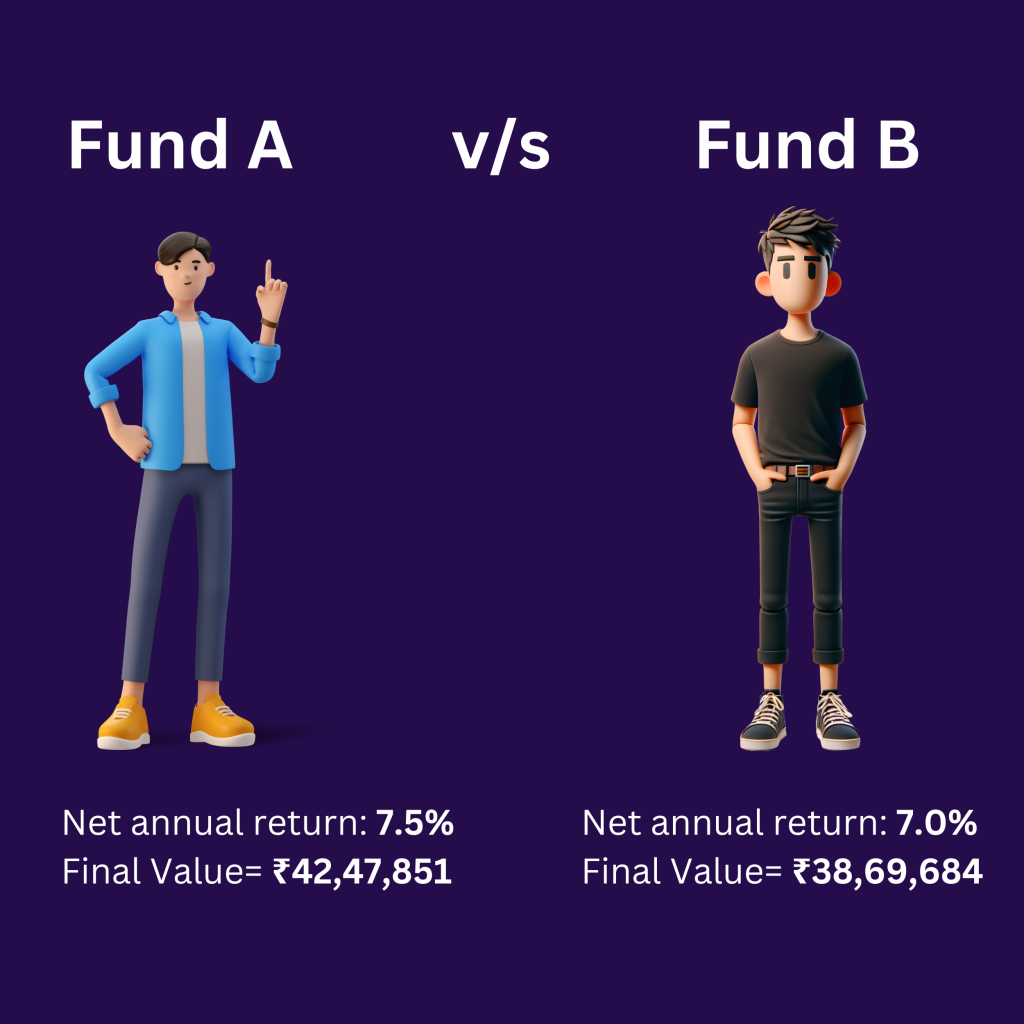
Imagine two mutual funds, Fund A and Fund B, each with an initial investment of ₹10,00,000. Both funds achieve an average annual gross return of 8% before expenses, but they have different expense ratios. Fund A has an expense ratio of 0.5%, while Fund B has an expense ratio of 1.0%.
- Fund A’s net annual return: 8.0% – 0.5% = 7.5%
- Fund B’s net annual return: 8.0% – 1.0% = 7.0%
Now, let’s calculate the value of the investments after 20 years.
For Fund A:
Final Value= ₹10,00,000×(1.075)^20 = ₹10,00,000×4.2478 = ₹42,47,851
For Fund B:
Final Value =₹10,00,000×(1.07)^20 = ₹10,00,000×3.8697 = ₹38,69,684
So, after 20 years:
- Fund A would grow to ₹42,47,851.
- Fund B would grow to ₹38,69,684.
A 0.5% difference in expense ratios resulted in Fund A outperforming Fund B by ₹3,78,167 over 20 years. This example clearly shows how even minor differences in expense ratios can significantly impact the long-term growth of your mutual fund investments.
The Role of Index Funds in Reducing Expense Ratios
Index funds and ETFs both offer cost-effective investment options with lower expense ratios compared to actively managed mutual funds. This is primarily because they are passively managed, meaning they aim to replicate the performance of a market index, requiring less frequent trading and operational management.
ETFs typically have even lower expense ratios than mutual funds due to their structure, which avoids the marketing and distribution costs associated with mutual funds. For cost-conscious investors, these options provide a way to minimize fees while still achieving market-based returns.
How Cashvisory Can Help You Manage Expense Ratios
Understanding and managing the expense ratios of your investments can be daunting, but it’s crucial for optimizing your portfolio’s performance.
At Cashvisory, we help you analyze your investments, including the expense ratios, and offer insights into how they impact your overall returns. We provide tailored advice on selecting funds with optimal expense ratios, ensuring you’re not losing more to fees than necessary.
Conclusion
The expense ratio is a critical factor that every investor should consider when selecting mutual funds or ETFs. It directly affects your net returns and can make a significant difference over time.
By prioritizing low expense ratios, especially in passively managed funds like index funds or ETFs, you can enhance your portfolio’s performance. And with the support of services like Cashvisory, you can ensure that your investments are cost-effective, helping you achieve your financial goals more efficiently.