
Key Takeaways
- Goal-Setting is Key: Clearly define your dream home, its cost, and your timeline to calculate how much you need to save.
- Smart Savings & Investments: Use SIPs, mutual funds, and other investment tools to build your corpus while balancing risk and returns.
- Loan Planning: Learn how saving a larger corpus can reduce your EMI burden and total interest paid on home loans.
- Financial Balance: Don’t compromise on other financial priorities like retirement, emergency funds, or children’s education.
- Start Early: Begin saving and investing early to benefit from compounding and avoid financial strain in the future.

Imagine walking into your dream home—the one you’ve always envisioned, with every detail crafted to perfection. It could be a cozy apartment in a city, a spacious villa by the countryside, or a luxurious penthouse with an incredible view. However, such a dream doesn’t happen overnight. It requires meticulous planning, disciplined savings, and smart investments to turn your vision into reality.
But where do you begin? How can you save enough to buy your dream home, and should you be thinking about a home loan right away or focus on building a solid corpus first?
In this guide, we’ll walk you through the steps to create your Dream Home Fund and show how strategic financial planning can help you achieve this milestone while balancing other financial goals.
Understanding the Dream Home Fund
A Dream Home Fund is a dedicated pool of savings and investments that you gradually build up to help finance your future home purchase. This fund can either cover the entire cost of the property or be used for a substantial down payment, reducing the size of the home loan you may need.
By planning and creating a fund instead of relying entirely on a loan, you gain more control over your finances, reduce the total cost of homeownership, and enjoy greater financial flexibility after the purchase.
Instead of relying entirely on a loan, planning a fund gives you more control, reduces the overall cost of homeownership, and allows you to enjoy financial flexibility post-purchase.
Goal Setting: The Foundation of Your Dream Home Fund
Before starting to save, it’s crucial to set clear, realistic goals. Ask yourself:

- What kind of home do I want? (Apartment, villa, etc.)
- Where is it located? (Urban, suburban, or rural)
- When do I want to purchase it? (5, 10, 15 years from now)
- How much will it cost? (Consider property price inflation)
Setting a specific target will help you estimate how much money you need to save monthly or annually to reach your goal. You can use online calculators to factor in the future price of real estate, based on your timeline and location.
Saving and Investment Strategies
Once you’ve defined your goal, you need to start building your fund. Here’s how you can proceed:
1. Systematic Savings Plan
Start by setting aside a fixed portion of your monthly income for your Dream Home Fund. Opening a dedicated savings account can help you stay disciplined and track your progress.
2. SIPs (Systematic Investment Plans)
SIPs allow you to invest a small amount regularly in mutual funds, helping your savings grow over time through the power of compounding. Choose equity or hybrid mutual funds based on your risk tolerance and investment horizon. Longer timelines allow you to invest more in equities, which tend to offer higher returns.
3. Fixed Deposits and Bonds
If you’re risk-averse, consider low-risk investments like fixed deposits or bonds. While the returns are lower than equity, they provide stability and help diversify your portfolio.
4. Real Estate Investment Trusts (REITs)
If you want to invest in real estate without directly buying property, REITs can be a smart choice. They allow you to earn rental income or property appreciation indirectly, helping you grow your corpus.
The Case for Home Loans: Balancing Savings, Financing, and Tax Benefits
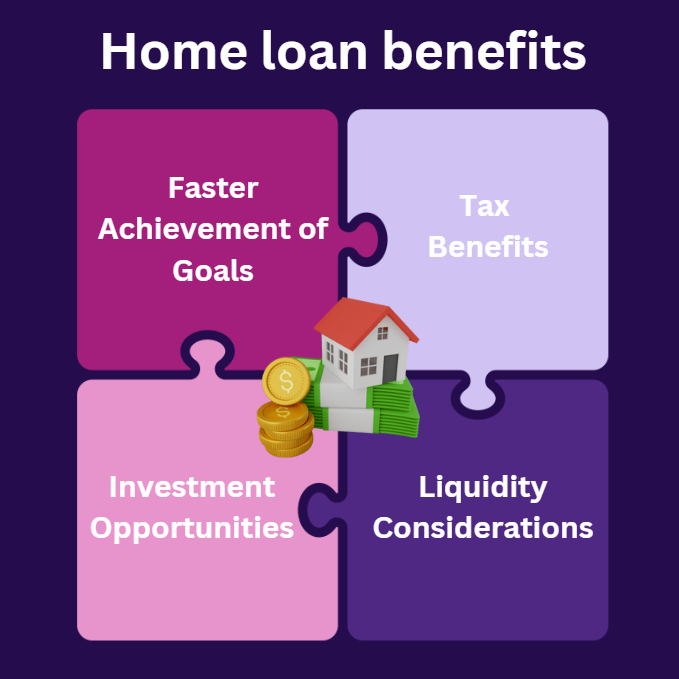
While saving for your dream home is essential, it’s also important to consider the advantages of taking a home loan. Opting for a loan can help you achieve your goal sooner and provide potential tax benefits that may outweigh the costs. Here’s why a home loan can be a strategic financial decision:
- Faster Achievement of Goals: Taking a home loan enables you to purchase your dream home sooner rather than waiting to save the full amount. This can be particularly advantageous in a rising real estate market where property values may increase significantly during your saving period.
- Tax Benefits: One major reason salaried individuals prefer home loans is the tax advantages. Under Sections 24(b) and 80C of the Income Tax Act, you can claim tax deductions on the interest paid (up to ₹2 lakh per year) and the principal repayment (up to ₹1.5 lakh per year). These deductions effectively reduce your taxable income, making it financially beneficial to take a loan instead of using your entire savings upfront.
- Investment Opportunities: Instead of locking all your savings into a highly illiquid asset like a home—especially if it isn’t generating rental income—you can invest those funds in higher-return assets. For instance, investing in stocks or mutual funds may yield returns that exceed your home loan interest rate, allowing your money to grow while you simultaneously pay off your mortgage.
- Liquidity Considerations: Cash savings tied up in a property can limit your financial flexibility. By leveraging a loan, you maintain liquidity, allowing you to respond to emergencies or seize other investment opportunities that may arise.
Loan Planning: Should You Save a Larger Corpus or Take a Bigger Loan?
One critical decision when planning for your dream home is how much you should save upfront versus how much you should rely on a home loan. Let’s compare two scenarios to see how saving a larger corpus impacts your overall cost of buying a home.
Scenario 1: Saving a Larger Corpus Before Taking a Loan
Let’s assume your target home costs ₹80 Lakhs. If you save ₹30 Lakhs over time, you will only need to borrow ₹50 Lakhs as a home loan. This will significantly reduce your EMI burden and the total interest you pay.
- Home Price: ₹80 Lakhs
- Corpus Saved: ₹30 Lakhs
- Loan Amount Needed: ₹50 Lakhs
- Interest Rate: 8% (Assumed)
- Loan Tenure: 20 years
| Corpus Saved | Loan Amt | EMI (20 yrs @8%) | Total Int paid over loan tenure |
|---|---|---|---|
| ₹30 lakhs | ₹50 lakhs | ₹41,822 | ₹50.37 lakhs |
By saving ₹30 Lakhs beforehand, your EMI is ₹41,822, and you pay ₹50.37 Lakhs in interest over 20 years.
Scenario 2: Saving a Smaller Corpus and Taking a Larger Loan
Now, let’s assume you only save ₹10 Lakhs, which means you need to borrow ₹70 Lakhs for the same home.
- Home Price: ₹80 Lakhs
- Corpus Saved: ₹10 Lakhs
- Loan Amount Needed: ₹70 Lakhs
- Interest Rate: 8% (Assumed)
- Loan Tenure: 20 years
| Corpus Saved | Loan Amt | EMI (20 yrs @8%) | Total Int paid over loan tenure |
| ₹10lakhs | ₹70lakhs | ₹58,551 | ₹70.52 lakhs |
With only ₹10 Lakhs saved, your EMI increases to ₹58,551, and you end up paying ₹70.52 Lakhs in interest over the loan tenure.
Comparison: Larger Corpus vs. Smaller Corpus
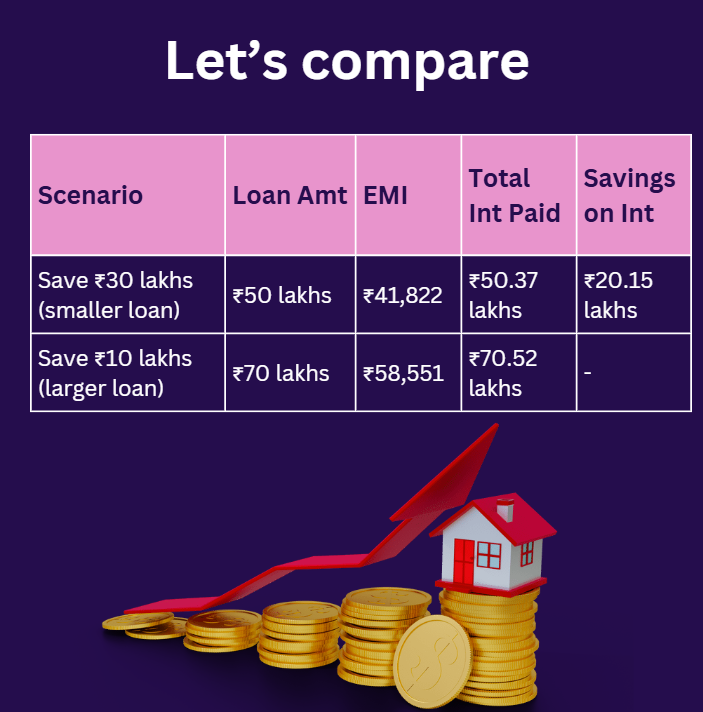
| Scenario | Loan Amt | EMI | Total Int Paid | Savings on Int |
| Save ₹30 lakhs (smaller loan) | ₹50 lakhs | ₹41,822 | ₹50.37 lakhs | ₹20.15 lakhs |
| Save ₹10 lakhs (larger loan) | ₹70 lakhs | ₹58,551 | ₹70.52 lakhs | – |
By saving a larger corpus of ₹30 Lakhs, you save ₹20.15 Lakhs in interest and have lower EMIs compared to borrowing more with a smaller corpus.
This comparison clearly shows the benefit of saving a larger amount before taking a home loan. It not only lowers your monthly EMI but also significantly reduces the overall interest burden, helping you save lakhs over the loan tenure.
Balancing Financial Goals
While building your Dream Home Fund, it’s essential to balance this with your other financial goals. You shouldn’t compromise on emergency funds, retirement savings, or children’s education just to speed up your home purchase.
- Create an Emergency Fund: Always have 6-12 months of living expenses in a liquid fund before focusing on your home.
- Retirement Planning: Don’t neglect long-term goals like retirement while building your home fund. Use EPF, PPF, or NPS for tax-saving investments.
- Regular Investments: Continue investing in SIPs and other instruments for other life goals, like children’s education.
Conclusion: The Key to a Balanced Dream Home Fund
Building your Dream Home Fund requires clear goal setting, disciplined savings, and strategic investments. By starting early and planning a realistic timeline, you can create a balance between saving and borrowing to reduce your financial burden.
At Cashvisory, we understand the importance of personalized, goal-based financial planning. Our experts can help you design a custom plan that balances your dream home aspirations with your other financial priorities. Start planning today to achieve your dream home without compromising on your future.
By focusing on disciplined savings and making smart investment choices, your dream home is no longer just a vision—it’s a reality waiting to happen.