

When it comes to building wealth through mutual funds, two of the most popular investment strategies are Systematic Investment Plans (SIPs) and Lump Sum Investments. Each has its own strengths and is suited for different market conditions and personal financial goals. In this blog, we’ll break down these two investment approaches, help you understand when to choose each, and offer insights on how they can aid in wealth creation.
Key Takeaways
- Market Timing: Lump sum investments tend to perform better when markets are low, while SIPs allow for cost averaging, making them ideal for volatile or rising markets.
- Risk Management: SIPs spread investment risk over time, while lump sum investments are more prone to market timing risk, especially if invested during market highs.
- Consistency is Key: SIPs promote disciplined investing by automating contributions, making them an excellent choice for young professionals who value long-term, consistent wealth building.
- Liquidity & Flexibility: SIPs offer better liquidity and flexibility compared to lump sum, which locks up capital for longer periods.
- Emotional Control: SIPs help reduce emotional reactions to market volatility, as they remove the temptation to time the market.
What Are SIP and Lump Sum Investments?
Systematic Investment Plan (SIP)
A SIP is a method of investing a fixed amount of money in a mutual fund scheme at regular intervals, typically monthly or quarterly. It’s an ideal choice for those who want to adopt a disciplined approach to investing and avoid market timing. This approach allows you to benefit from rupee-cost averaging, where your investment buys more units when prices are low and fewer units when prices are high, reducing the impact of market volatility over time.
Lump Sum Investment
As the name suggests, this involves investing a large sum of money at one go. It works best when markets are at a lower point, offering the potential for higher returns when the markets recover. However, it requires a large initial investment and can expose the investor to short-term market fluctuations, especially if the investment is made during a market high
Key Differences Between SIP and Lump Sum
| Aspect | SIP | LUMPSUM |
|---|---|---|
| Investment Style | Regular, small investments | One-time large investment |
| Market Timing | Reduces risk by spreading investments. | High exposure to market volatility. |
| Discipline | Encourages regular investing. | Requires proactive market analysis. |
| Rupee-Cost Averaging | Effective due to regular purchases. | Not applicable (one-time investment). |
| Risk Level | Lower due to gradual investment. | Higher risk if invested at a market peak. |
| Flexibility | High, as investors can start with small amounts. | Requires a significant initial corpus. |
When to Choose SIP?
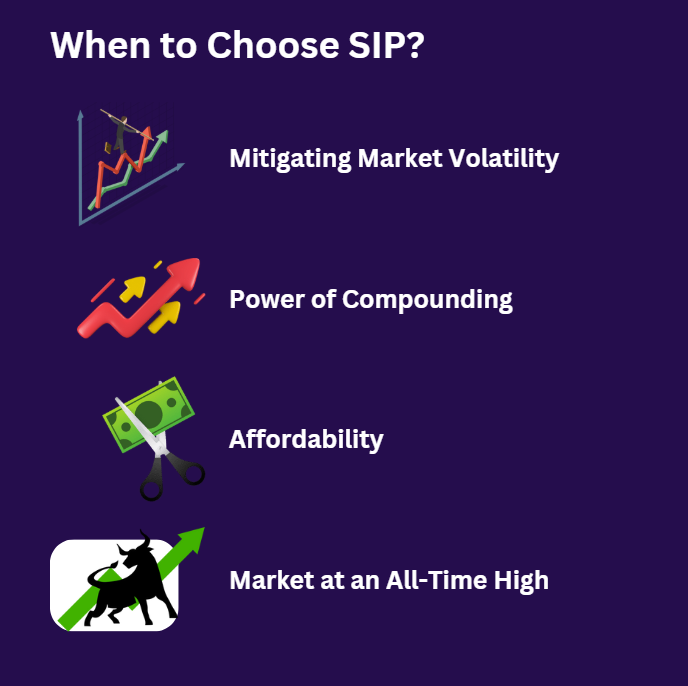
SIP is the go-to strategy for most young professionals, especially those looking to invest regularly and steadily over a longer period. Here’s why SIP might work for you:
- Mitigating Market Volatility: Since you’re investing at regular intervals, SIPs naturally smoothen out market fluctuations. When the markets dip, your regular investment buys more units, and when the markets are high, you buy fewer units—this is called rupee-cost averaging.
- Power of Compounding: SIPs benefit from compound growth. Even small, regular contributions can grow exponentially over time. Starting a SIP early can give you a head start on wealth-building.
- Affordability: You don’t need a large sum to start investing. SIPs allow you to begin with as little as ₹50 per month, making it accessible for young professionals or those starting their careers.
- Market at an All-Time High: When markets are at record highs, it’s wise to adopt a SIP approach rather than a lump sum, as SIPs minimize the risk of entering the market at a peak and experiencing subsequent losses.
When to Opt for Lump Sum?
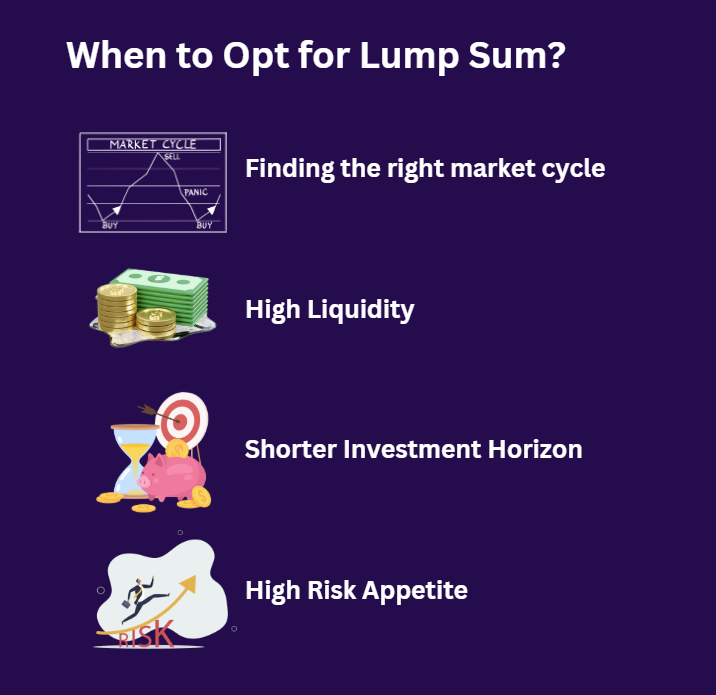
While SIP is more suited to consistent long-term investing, lump sum investments may offer higher rewards under certain circumstances. Here’s when lump sum might be the better strategy:
Analyzing Market Cycles and Key Indicators
If you have a large corpus and a solid grasp of market cycles, including industry trends and key economic indicators, a lump sum investment can offer substantial returns as markets recover. This strategy requires in-depth knowledge and timing, as it involves a higher level of risk if market conditions shift unexpectedly.
High Liquidity
If you receive a windfall, such as a bonus or inheritance, and you’re willing to take calculated risks, a lump sum can allow you to take advantage of sudden market opportunities.
Shorter Investment Horizon
If your investment horizon is shorter, a lump sum investment can help you achieve higher returns, but it’s crucial to manage risk effectively. In this case, a diversified portfolio with a greater allocation to low-risk funds, such as money market instruments, can help contain market fluctuations in the near term. This approach balances growth potential with risk management, making it ideal for investors seeking stability over a shorter timeframe.
– Risk Appetite: Investors with a higher risk tolerance and a keen understanding of market cycles might prefer the lump sum approach for wealth building.
Real-World Scenarios: Which Works Better for You?

Scenario 1: You’re a 25-year-old working professional who wants to start investing for long-term goals like retirement or buying a home. Since you may not have a large corpus to invest all at once, SIPs are ideal for you. It allows you to make regular, manageable contributions and benefit from market volatility over time.
Scenario 2: You’re a 40-year-old who has recently received an inheritance and believes the market is undervalued. You could consider a lump sum investment to capitalize on the current market conditions and potentially see higher returns if the market rises in the near future.
Data-Driven Comparison: SIP vs Lump Sum
Let’s compare these approaches with some data. Historically, SIPs have shown resilience during volatile periods. For instance, during market downturns like the 2008 financial crisis or the COVID-19 pandemic, SIP investors were able to purchase more units when the market was low, resulting in higher returns when the market eventually recovered.
On the other hand, lump sum investments during market lows (e.g., post-2008 crash) have delivered exceptional returns in the subsequent bull run. But the risk of investing a lump sum at the wrong time can lead to potential losses if the market declines further.
The Role of Consistency in Wealth Building
Regardless of whether you choose SIP or lump sum, consistency in investing is key to building wealth. A long-term perspective, coupled with regular contributions, helps ride out market fluctuations and enables investors to take advantage of compounding growth. It’s also important to stay aligned with your financial goals and risk tolerance, adjusting your strategy as needed.
Conclusion: What’s Right for You?
There’s no one-size-fits-all answer. SIPs offer a safer, more disciplined approach, especially for those with smaller amounts to invest or less confidence in timing the market. Lump sum investments, on the other hand, can be highly rewarding if the timing is right, but carry higher risks.
Before making a decision, consider factors such as your current financial situation, market conditions, investment horizon, and risk appetite. Whichever route you choose, ensure it aligns with your long-term wealth-building goals.
To make an informed decision, consider exploring Cashvisory’s financial planning tools, which offer insights tailored to your personal needs.