
Key Takeaways:
- Investing is a marathon, not a sprint. Focus on long-term goals and stay patient.
- Know your “why.” Understanding your motivations will fuel your investment journey and keep you on track.
- Assess your risk tolerance. Choose investment strategies that align with your comfort level.
- Educate yourself gradually. Continuously learn about investing and stay informed about market trends.
- Simplify the process. Utilize user-friendly platforms, explore low-cost options, and automate your investments.
- Diversify your portfolio. Spread your investments across different asset classes to reduce risk.
- Start small and be consistent. Even small contributions can add up over time.
- Remember, investing is a journey of growth. Embrace the learning process and celebrate your progress along the way.
Introduction
Investing might seem like a distant dream, a game played by Wall Street wizards. You might think, “I don’t have enough money,” or “I’ll probably just lose it all anyway.” But the truth is, investing is more accessible than you think. It’s about more than just numbers and spreadsheets; it’s about your dreams, your goals, and your vision for the future.
This blog will break down the investing process into simple, actionable steps, making it feel less like a daunting mountain to climb and more like an exciting adventure. We’ll explore how to overcome those initial fears, discover the “why” behind your investing journey, and build a personalized plan that sets you up for success. So, buckle up and get ready to embark on a journey towards a brighter financial future.
1. Know your “why”
Okay, so we’ve talked about facing your fears and realizing that investing is more like learning to ride a bike than rocket science. Now, let’s get to the heart of the matter: your “why.”
Your “why” is the driving force behind your investment journey. It’s the reason you’re willing to put in the effort, to make those small sacrifices, to consistently contribute to your investments. It’s the vision that keeps you motivated during market downturns and helps you stay focused on your long-term goals.
Think about it: would you be as motivated to save for a generic “retirement fund” as you would be to save for a once-in-a-lifetime adventure? Probably not.
Your “why” could be anything:
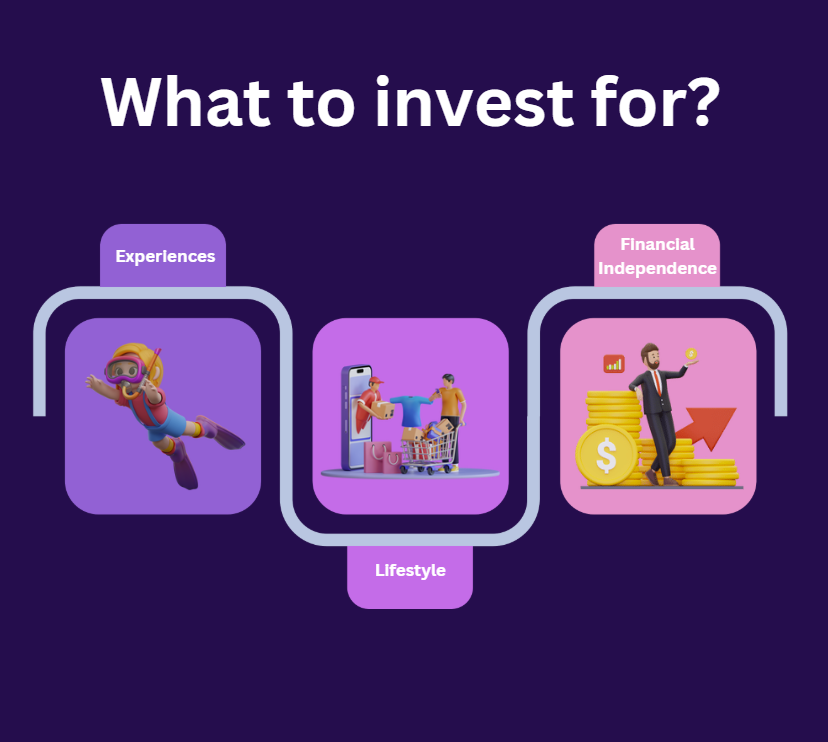
- Experiences: That dream backpacking trip, a hot air balloon ride over the Grand Canyon, a front-row seat to a concert by your favorite band.
- Lifestyle: Owning a cozy cabin in the woods, traveling the world every other year, the freedom to pursue your passions without the constant worry of money.
- Financial Independence: The ability to support your family, leave a legacy for your children, or simply the peace of mind that comes with financial security.
Whatever your “why” may be, make sure it’s deeply personal and meaningful to you. It should be something that excites you, inspires you, and motivates you to take action.
Once you’ve identified your “why,” you can start to define your financial goals. What does it actually cost to achieve that dream backpacking trip? How much money do you need to save for a down payment on a house? By setting specific, measurable, achievable, relevant, and time-bound (SMART) goals, you can create a roadmap for your investment journey.
And remember, your “why” is not static. It can evolve and change over time. As your life changes, so too will your financial goals. That’s okay! Regularly revisit your “why” and make adjustments as needed.
The word “risk” might sound scary, but hear me out. Investing always involves some level of risk. It’s like riding a rollercoaster: there are thrills, excitement, and maybe a few stomach-churning drops along the way.
Think of it this way: the higher the potential reward, the higher the potential risk. Just like you wouldn’t expect to win the lottery without buying a ticket, you shouldn’t expect to earn high returns without taking on some risk.
But here’s the key: you need to find the right level of risk for you. It’s like finding the perfect spice level for your food – not too bland, not too spicy.
2. How do you figure out your risk tolerance?
Imagine yourself on a rollercoaster. Do you love the feeling of weightlessness and the adrenaline rush? Or do you prefer a gentler ride with a few mild dips and turns?
Your risk tolerance is similar. Are you comfortable with the possibility of market fluctuations and the potential for short-term losses? Or do you prefer a more conservative approach with lower potential returns but also lower risk?
There are a few things to consider:
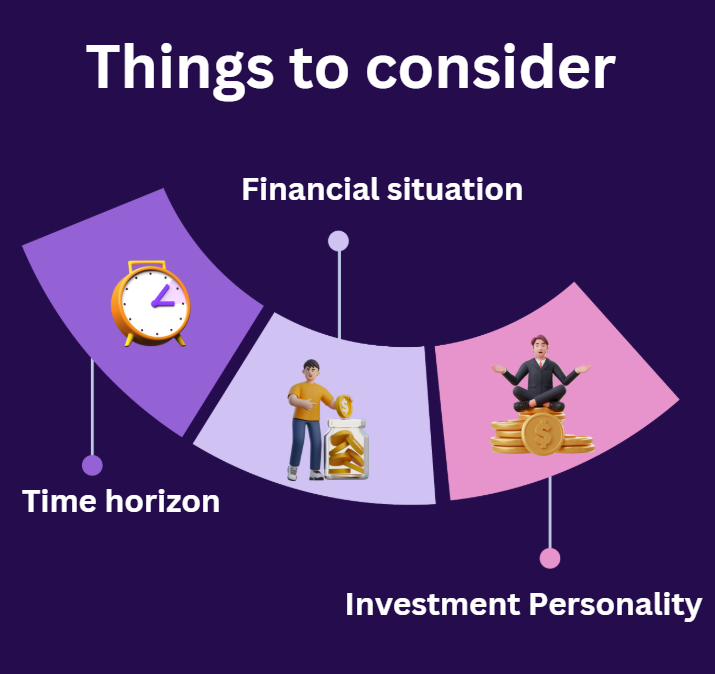
- Your time horizon: How long do you have to invest? If you’re investing for a long-term goal like retirement, you generally have more time to ride out market downturns.
- Your financial situation: Do you have any other financial commitments, like student loans or a mortgage?
- Your personality: Are you someone who likes to take risk for extra rewards or someone who prefers a more cautious approach?
Don’t worry, you don’t have to figure it out all on your own. There are resources available to help you assess your risk tolerance, like Cashvisory’s risk profiling questionnaire. You can take online quizzes, talk to a financial advisor, or even just spend some time reflecting on your own comfort level with risk.
Remember, there’s no right or wrong answer. The goal is to find an investment strategy that aligns with your personality and your financial goals which might change over time and you would have to twerk your strategy accordingly.
3. Educate Yourself Gradually
Okay, now that you understand your risk tolerance and have a clear picture of your “why,” it’s time to start educating yourself about investing.
You don’t need to become a Wall Street analyst overnight. Start with the basics. Read books, articles, and blogs about investing. Watch informative videos and listen to podcasts.
There are tons of resources available online and offline:

- Books: “The Intelligent Investor” by Benjamin Graham is a classic for a reason.
- Websites: A great resource for learning about investing concepts are sites like Investopedia and Cashvisory.
- Podcasts: There are many engaging podcasts that break down complex investment topics in an easy-to-understand way.
- Financial Advisors: Don’t be afraid to seek guidance from a qualified financial advisor. They can provide personalized advice and help you create a customized investment plan.
Remember, learning is an ongoing process. The investment landscape is constantly evolving, so it’s important to stay informed and continue learning throughout your investment journey.
4. Simplifying the Investment Process: Automation is Key
Okay, so you’ve laid the groundwork: you’ve identified your “why,” assessed your risk tolerance, and started educating yourself about investing. Now, let’s talk about making the actual investing process simpler.
Well, good news! Investing doesn’t have to be complicated. There are several ways to simplify the process and make it more manageable:
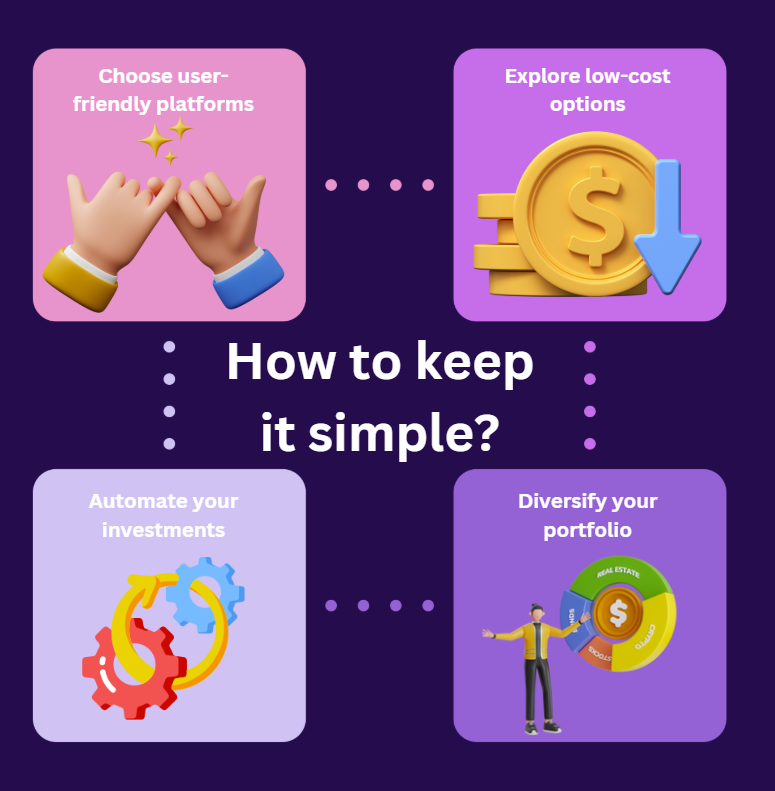
- Choose user-friendly platforms: Look for investment platforms that are easy to navigate and understand. Many platforms offer tools and resources to help you make informed decisions.
- Explore low-cost options: Consider investing in low-cost index funds or exchange-traded funds (ETFs). These funds offer broad market exposure at a fraction of the cost of actively managed funds.
- Automate your investments: Set up automatic contributions to your investment accounts. This “set it and forget it” approach makes saving and investing effortless. Think of it like setting up automatic payments for your bills – it’s one less thing to worry about.
- Diversify your portfolio: Spread your investments across different asset classes (stocks, bonds, real estate) to reduce risk. Contact a registered investment advisor (RIA) to help you out.
Your portfolio needs a diverse mix of investments to weather market fluctuations and achieve your long-term goals. By simplifying the investment process, you can reduce stress and free up more time to focus on the things that matter most to you.
Conclusion
So, there you have it. Investing might seem daunting at first, but it doesn’t have to be. By shifting your mindset, understanding your risk tolerance, and simplifying the process, you can embark on your investment journey with confidence.
Remember, investing is a marathon, not a sprint. It’s about building a strong foundation for your future and creating a life you love.
Think of your investments as seeds you’re planting. With consistent effort and the right care, those seeds will grow into a beautiful, thriving garden.
Don’t let fear hold you back. Take that first step. Start small, learn as you go, and celebrate your progress along the way.
Investing is not just about growing your money; it’s about growing yourself. It’s about gaining financial independence, achieving your dreams, and creating a life of abundance.
So go out there, embrace the journey, and watch your financial future bloom.